Navigating the 2026 Condo Correction: How to Spot Blue-Chip Deals in South Florida
Market Intelligence, Buyer Strategy & Long-Term Investment Perspective
Introduction
South Florida’s condominium market is undergoing one of its most important transitions in over a decade.
After years of aggressive appreciation across Florida real estate, parts of the condo sector are now entering a correction phase driven by rising insurance costs, increased reserve requirements, stricter regulations, and shifting buyer expectations. For many buyers searching for homes for sale in Florida, Palm Beach real estate, or property for sale near me opportunities, the headlines may appear concerning.
But beneath the surface, a different story is unfolding.
The 2026 condo correction is not a collapse—it is a separation.
A separation between aging inventory and premium assets.
Between financially weak buildings and professionally managed communities.
Between speculative pricing and long-term value.
At Watley Coastal & Club Group, we are helping clients navigate this evolving landscape daily. Sophisticated buyers are not retreating from the market—they are strategically identifying blue-chip condo opportunities positioned to outperform over the long term.
For buyers searching for luxury homes for sale, Palm Beach Florida condos for sale, or real estate for sale across South Florida, this correction may present one of the best acquisition windows in years.
Market Overview: Why the Condo Market Is Correcting
The South Florida condo market experienced extraordinary appreciation between 2020 and 2024. Migration from high-tax states, low interest rates, and intense demand for coastal living pushed pricing rapidly higher across Palm Beach County, Miami, Fort Lauderdale, and Martin County.
However, the market environment in 2026 looks very different.
Several structural forces are now reshaping the condo segment.
1. Rising Insurance Costs
Insurance premiums across Florida have increased substantially, particularly for waterfront and coastal condominium buildings.
Buyers researching Palm Beach real estate listings or homes for sale in Palm Beach County Florida are paying closer attention to long-term ownership costs than ever before.
2. Reserve Funding Requirements
Following updated Florida legislation, many condo associations are now required to maintain stronger reserves and complete structural inspections.
This has led to:
Higher HOA fees
Special assessments
Greater financial scrutiny
Increased buyer due diligence
3. Aging Building Inventory
Many older condo buildings throughout South Florida are facing deferred maintenance issues, outdated infrastructure, and rising operational costs.
This is particularly impacting:
Older coastal buildings
Non-renovated communities
Mid-tier condo inventory
Secondary-location properties
4. More Selective Buyers
Today’s luxury buyers are significantly more informed and risk-aware.
Buyers searching for homes near me or Palm Beach Florida real estate are now evaluating:
Association reserves
Insurance exposure
Structural reports
Long-term building management
Future capital expenditures
As a result, not all condos are performing equally.
The Key Shift: A Market Separation Is Happening
The most important insight about the 2026 condo correction is this:
The market is not moving together anymore.
Instead, it has split into two categories.
Category 1: Vulnerable Condo Inventory
This includes:
Older buildings
Underfunded associations
Deferred maintenance properties
Inland secondary locations
Buildings lacking modernization
These properties are experiencing:
Longer days on market
Greater price reductions
Buyer hesitation
Financing complications
Increased negotiation pressure
Buyers searching for housing listing opportunities or affordable realestate for sale may find significant discounts in this segment—but also increased risk.
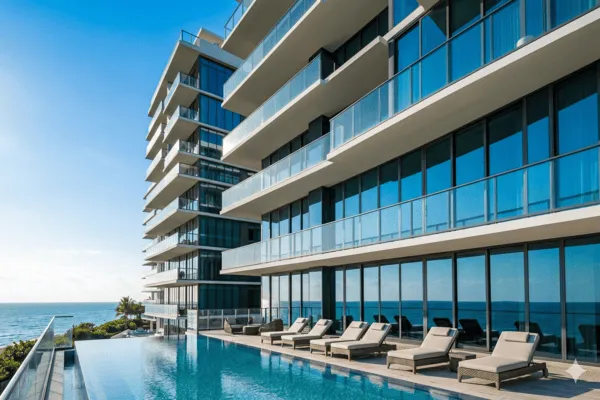
Category 2: Blue-Chip Condo Assets
On the opposite side, premium condo properties continue demonstrating strong demand and pricing resilience.
These include:
Newer luxury developments
Well-capitalized buildings
Branded residences
Waterfront luxury towers
Professionally managed communities
Buildings with strong reserve structures
Buyers searching for luxury houses for sale, Palm Beach homes for sale, or Palm Beach Florida condos for sale continue competing aggressively for these assets.
The correction is primarily affecting weaker inventory—not true luxury quality.
What Defines a Blue-Chip Condo in 2026?
Not all condos are investment-grade.
Today’s top-performing luxury condos share several important characteristics.
1. Strong Financial Health
Sophisticated buyers are prioritizing buildings with:
Fully funded reserves
Transparent financial reporting
Minimal deferred maintenance
Healthy operating budgets
Stable HOA structures
For buyers searching for homes for sale in Palm Beach County or Palm Beach properties, financial quality has become as important as location.
2. Professional Management
Buildings with experienced management companies consistently outperform because they maintain operational consistency, stronger maintenance standards, and better resident experiences.
Professional management also improves long-term resale confidence.
3. Prime Waterfront or Lifestyle Positioning
Location still matters enormously.
Blue-chip condos typically occupy:
Oceanfront locations
Intracoastal corridors
Walkable luxury districts
Marina-access communities
Golf and wellness environments
This is especially true across:
Palm Beach Gardens real estate
Jupiter Florida real estate
Palm Beach Island
Downtown West Palm Beach
Stuart Florida real estate
4. Modern Construction & Updated Infrastructure
Newer construction and recently renovated buildings continue outperforming because buyers want certainty.
Key features include:
Impact-rated glass
Elevated construction
Modern amenities
Smart building systems
Resilient infrastructure
Updated roofing and mechanical systems
Buyers researching homes in Florida increasingly prioritize long-term functionality alongside aesthetics.
5. Lifestyle & Service Integration
Luxury buyers now expect more than square footage alone.
Top-performing condo communities increasingly offer:
Wellness centers
Concierge services
Private dining
Spa facilities
Marina access
Resort-style amenities
This mirrors the growing demand for branded and hospitality-driven luxury residences throughout South Florida.
Buyer Strategy: How to Identify Opportunity During the Correction
The 2026 condo correction is creating opportunities—but only for buyers who approach the market strategically.
1. Separate Price From Value
A discounted condo is not automatically a good investment.
Buyers searching for property for sale palm beach florida opportunities should focus on:
Long-term desirability
Structural quality
Financial health
Market positioning
Building reputation
True blue-chip opportunities often maintain stronger pricing because quality remains scarce.
2. Conduct Deep Due Diligence
Today’s buyers must carefully review:
Reserve studies
HOA financials
Insurance history
Structural inspection reports
Pending assessments
Litigation exposure
This level of due diligence is now essential across Florida real estate transactions.
3. Prioritize Lifestyle Corridors
Luxury demand remains strongest in highly desirable coastal and lifestyle-driven locations.
This includes:
Palm Beach Gardens homes for sale
Jupiter homes for sale
Palm Beach real estate
Jupiter beach real estate
Stuart Florida homes for sale
Hobe Sound real estate
Even during corrections, premium locations continue attracting affluent buyers.
4. Watch for Motivated Sellers
Certain owners are more sensitive to rising HOA fees, insurance increases, or special assessments.
This creates opportunities for strategic negotiation, including:
Price reductions
Seller concessions
Closing cost credits
Furniture inclusions
Extended due diligence periods
For buyers searching for off market homes for sale or undervalued condo opportunities, this environment can be highly advantageous.
Lifestyle Perspective: Why Luxury Condo Demand Still Exists
Despite the correction, luxury condo living remains highly desirable for many affluent buyers.
Buyers continue prioritizing:
Lock-and-leave convenience
Security
Waterfront access
Walkability
Service-driven living
Reduced maintenance responsibilities
This is particularly true among:
Seasonal residents
International buyers
Executives
Retirees
Multi-home owners
For buyers comparing houses in Florida for sale versus luxury condos, lifestyle efficiency often becomes a major deciding factor.
Investment Outlook: Why Blue-Chip Condos Will Likely Outperform
From an investment perspective, the condo correction is creating a clearer separation between speculative inventory and durable luxury assets.
Blue-chip condo communities benefit from:
Scarcity
Strong management
Premium locations
Lifestyle demand
Higher-quality buyer pools
As weaker inventory struggles, premium buildings are likely to capture an even larger share of future demand.
This is especially true for:
Branded residences
Waterfront luxury towers
Wellness-oriented developments
New construction Palm Beach County projects
Long-term, the correction may actually strengthen the luxury condo market by forcing greater transparency, stronger financial structures, and higher operational standards.
What This Means for Palm Beach & Martin County Buyers
For buyers exploring Palm Beach Gardens for sale opportunities, Martin County homes for sale, or Palm Beach Florida real estate, the current market offers a rare advantage.
Buyers now have the ability to:
Negotiate strategically
Conduct deeper due diligence
Compare higher-quality inventory
Identify motivated sellers
Target long-term value opportunities
At the same time, premium condo inventory remains limited—particularly along waterfront corridors.
This creates a two-speed market where quality continues outperforming quantity.
Conclusion: Corrections Create Opportunity for Strategic Buyers
The 2026 South Florida condo correction is not a signal to avoid the market.
It is a signal to become more selective.
For buyers searching for homes for sale in Florida, luxury homes for sale, or Palm Beach Florida condos for sale, the opportunity lies in understanding the difference between temporary pricing weakness and long-term asset quality.
The strongest condo investments in today’s market are not necessarily the cheapest.
They are the properties with:
Financial stability
Prime locations
Structural integrity
Strong management
Enduring lifestyle appeal
At Watley Coastal & Club Group, we help clients navigate this evolving market with precision—identifying blue-chip opportunities positioned to outperform well beyond the current correction cycle.
Because in today’s luxury market, successful investing is no longer about chasing momentum—
It is about identifying durable value before the broader market recognizes it.
