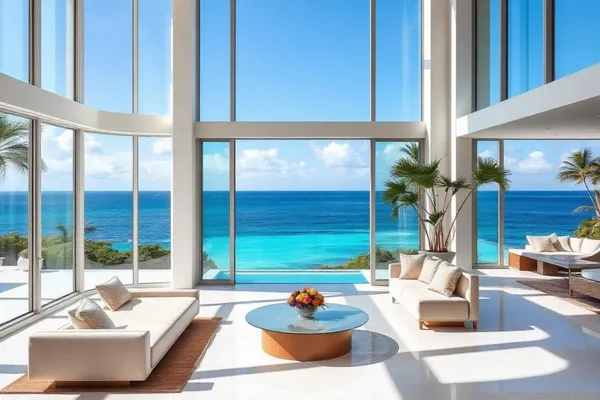
The Rise of Luxury Waterfront Living in Palm Beach County
Market Intelligence, Lifestyle Elevation & Long-Term Investment Perspective
Luxury waterfront living in Palm Beach County has evolved from a seasonal indulgence into a strategic acquisition category for high-net-worth buyers. What was once considered a secondary coastal escape has become a primary residence choice for executives, entrepreneurs, family offices, and legacy investors seeking tax efficiency, lifestyle alignment, and long-term asset stability.
Driven by migration from the Northeast, Midwest, California, and select international markets, Palm Beach County’s waterfront corridor has entered a phase defined not by speculative spikes—but by structural demand. Deepwater access, Intracoastal frontage, and oceanfront estates now represent some of the most defensible luxury real estate positions in Florida. Scarcity, zoning limitations, and buildable lot constraints continue to tighten inventory, reinforcing long-term pricing strength.
This is not simply a lifestyle trend. It is a capital migration story backed by wealth movement, demographic shifts, and strategic portfolio reallocation.
Market Overview: Scarcity Is Driving Stability
Palm Beach County’s luxury waterfront market operates within a fundamentally constrained supply environment. Unlike inland luxury development, waterfront inventory cannot be replicated. Barrier islands, Intracoastal frontage, and navigable canals with no-fixed-bridge access exist within finite geographic boundaries.
Key structural drivers include:
Limited deepwater dockage inventory
Height and density restrictions along coastal corridors
Strict environmental protections
Increasing construction costs for new waterfront builds
Median pricing for waterfront estates continues to outperform broader luxury segments, particularly properties offering:
Direct Intracoastal frontage
Oceanfront positioning
No-fixed-bridge access to the Atlantic
Dockage capable of accommodating larger vessels
Cash purchases remain a dominant force in the upper tier of the market. Buyers are less rate-sensitive and more focused on asset positioning, privacy, and long-term resilience. Even during periods of broader market recalibration, prime waterfront properties demonstrate pricing durability due to their irreplaceable nature.
Inventory levels remain below historical norms, particularly in ultra-prime enclaves and deepwater boating corridors. This inventory compression continues to create competitive positioning for premium listings.
Lifestyle & Community Insight: Where Water Meets Prestige
Waterfront ownership in Palm Beach County is not solely about view corridors—it is about access, status, and daily integration with coastal life.
Buyers are typically drawn to one of three lifestyle categories:
1. Intracoastal & Deepwater Living
Ideal for yacht owners and boating enthusiasts, these properties provide protected docking and direct Atlantic access. The ability to step from residence to vessel within minutes is a defining lifestyle differentiator.
2. Oceanfront Estates
Oceanfront properties provide unobstructed Atlantic exposure, expansive lot depth, and architectural prominence. Privacy walls, gated entries, and estate-scale footprints dominate this category.
3. Golf & Waterfront Hybrid Communities
Select private club communities blend water frontage with championship golf, offering a dual-lifestyle appeal. Residents benefit from curated social environments alongside coastal access.
Beyond boating and beaches, Palm Beach County offers:
Private aviation access
High-end dining and retail districts
Elite golf and country clubs
Expanding luxury service infrastructure
Seasonal residents increasingly convert second homes into primary residences, reinforcing year-round demand patterns. The winter “season” remains socially active, but permanent migration is now the stronger force behind absorption rates.
Buyer Perspective: Why Wealth Is Choosing Waterfront
Today’s luxury waterfront buyer in Palm Beach County typically fits into one of several profiles:
Relocating finance or tech executives
Business owners post-liquidity event
Multi-home portfolio investors
Family offices diversifying geographic exposure
Northeast retirees seeking tax efficiency
Decision drivers include:
Florida’s favorable tax structure
Asset preservation through tangible real estate
Lifestyle elevation
Privacy and estate-level security
Long-term generational planning
Due diligence priorities often focus on:
Dock specifications and seawall condition
Insurance and flood zone considerations
Renovation versus new construction viability
HOA governance (where applicable)
Elevation and storm resilience
Buyers are highly sophisticated. They are not purchasing impulsively—they are allocating capital strategically. Waterfront real estate is increasingly viewed as both a personal-use asset and a portfolio stabilizer.
Investment Outlook: Defensive Luxury in a Volatile World
Luxury waterfront property in Palm Beach County exhibits several characteristics of a defensive asset class:
Limited Replication
Waterfront land is finite. Development cannot expand outward without significant environmental and regulatory constraints.
Strong Migration Pipeline
Wealth migration into South Florida remains active. Even if velocity slows temporarily, demographic trends support long-term demand.
Portfolio Diversification
High-net-worth individuals increasingly view prime waterfront real estate as a hedge against equity volatility and currency risk.
Global Appeal
International buyers continue to view Palm Beach County as politically stable and investment-secure compared to other global luxury hubs.
While short-term pricing adjustments can occur during broader economic shifts, prime waterfront inventory historically recovers quickly due to constrained supply and consistent demand from liquidity-rich buyers.
In essence, the asset class behaves differently than mid-market housing. It is less dependent on financing conditions and more tied to capital flow dynamics.
The Evolution from Lifestyle Purchase to Strategic Positioning
A notable shift over the past decade is the reclassification of waterfront ownership. What was once seen as discretionary has become strategic.
Buyers are:
Establishing primary residency
Relocating corporate headquarters
Anchoring family wealth in tax-advantaged states
Transitioning seasonal homes into permanent estates
As infrastructure, private schools, healthcare systems, and luxury retail corridors expand throughout Palm Beach County, the long-term livability profile continues strengthening.
This evolution suggests that waterfront property is no longer cyclical vacation demand—it is structural lifestyle migration.
Conclusion: The Rise Is Structural, Not Temporary
The rise of luxury waterfront living in Palm Beach County is not a short-term market phenomenon. It is the result of:
Finite waterfront supply
Persistent wealth migration
Tax-driven relocation
Lifestyle prioritization
Investment-grade capital allocation
For high-net-worth buyers, waterfront real estate here represents a convergence of prestige, personal enjoyment, and long-term financial positioning.
As inventory tightens and buildable lots diminish, strategic acquisition timing becomes increasingly important. The market is competitive—but for buyers seeking durable luxury assets, Palm Beach County’s waterfront corridor continues to stand among the most compelling coastal opportunities in the United States.
